Ολόκληρη η Συνθήκη Βουκουρεστίου 1913 – πουθενά ο όρος «Μακεδονία»! ψεύδη τα ποσοστά…
Γράφει ο Ανδρέας Σταλίδης.
Το Αντίβαρο σας παρουσιάζει ολόκληρη την Συνθήκη Ειρήνης Βουκουρεστίου το 1913.
Αυτή για την οποία μας έχουν πρήξει τα
συκώτια ότι δήθεν «μοίρασε την Μακεδονία σε τρία (ή τέσσερα) κράτη, με
την Ελλάδα να έχει το 51%, την Γιουσκοσλαβία το 38%, την Βουλγαρία το
10% και την Αλβανία λιγότερο από το 1%».
Αυτό δεν λένε;
Το λέει ο (τέως) υπουργός εξωτερικών Νίκος
Κοτζιάς, το λέει ο πρωθυπουργός
Αλέξης Τσίπρας (μαζί με την Μπακογιάννη και τον Μπουτάρη), το λέει ο
Τζανακόπουλος, το λένε υπουργοί του ΣΥΡΙΖΑ (
εδώ και
εδώ), το λέει ο
Ριζοσπάστης, το λέει ο
902, o
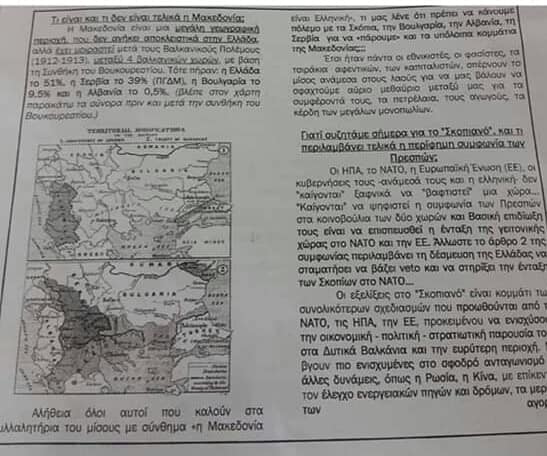
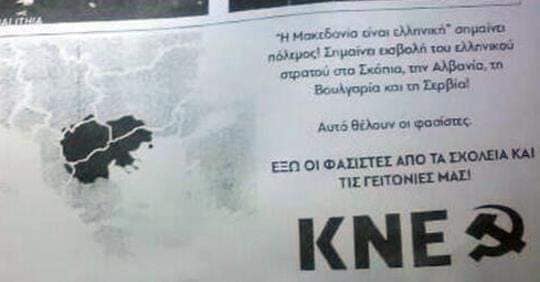
Μπογιόπουλος, το λέει το ΚΚΕ στα φυλλάδια που μοιράζει στα σχολεία (
φωτο 1,
φωτο 2,
φωτο 3), το λέει η
Εφημερίδα των Συντακτών, to
Documento, το λέει ο Μαυρίδης του
liberal.gr, το λέει η
Καθημερινή (ως εφημερίδα), το γράφει σε blog του
Πρώτου Θέματος, το λένε καθηγητές πανεπιστημίου (στην
Αυγή, στο
Στο Κόκκινο, στο
Κουτί της Πανδώρας), το γράφουν στα ελληνικά πανεπιστήμια (
Μάστερ στο Παν. Μακεδονίας), το λέει η
εγγονή του Τίτο, διάφοροι (
εδώ,
εδώ,
εδώ,
εδώ,
εδώ). Το λέει εμμέσως και ο υπ. εξ. των Σκοπίων
Δημητρώφ. Το λένε λίγο-πολύ όλοι.
Όπως βλέπουμε όλοι δεν υπάρχει πουθενά ο
όρος Μακεδονία. Υπάρχουν σε αρκετά άρθρα ονομασίες περιοχών που
καθορίζουν τα σύνορα, αλλά πουθενά ο όρος Μακεδονία.
Η Οθωμανική Αυτοκρατορία ποτέ δεν
χρησιμοποίησε τον όρο Μακεδονία για να ονομάσει οποιαδήποτε περιοχή.
Χρησιμοποιούσε διοικητικές περιοχές που ονόμαζε Βιλαέτια. Υπήρχε έτσι το
Βιλαέτι Θεσσαλονίκης, Μοναστηρίου, Αδριανούπολης.
Μας λένε, ότι με την Συνθήκη
του Βουκουρεστίου το 1913 η Μακεδονία μοιράστηκε μεταξύ Γιουγκοσλαβίας, Ελλάδας
και Βουλγαρίας.
Η Συνθήκη του Βουκουρεστίου, όμως,
δεν αναφέρει κάτι τέτοιο!
Και ο χάρτης που αναφέρει τον
όρο Μακεδονία, τον αναγράφει σε ελληνική επικράτεια!
Ο ίδιος ακριβώς χάρτης υπάρχει και στην διεθνή έκδοση της
Wikipedia για την εν λόγω συνθήκη.
Προσέξτε τώρα και την πόλη Uskub μεταξύ
του Ι και του Α από τη λέξη SERVIA. Uskub είναι η Οθωμανική εκδοχή της
πόλης των Σκοπίων. Μάλιστα, τα Σκόπια όχι μόνο δεν ήταν μέρος της
Μακεδονίας, όχι μόνο δεν ανήκαν σε κανένα από τα τρία Βιλαέτια, των
οποίων τα εδάφη μοιράστηκαν, όχι μόνο δηλαδή ανήκαν σε άλλο Βιλαέτι, στο
Βιλαέτι του Κοσσυφοπεδίου, αλλά από το 1888 ως το 1914, ήταν η πρωτεύουσα του Βιλαετίου του Κοσσυφοπεδίου (
δείτε το εδώ)!. Ως συμπέρασμα, άνω του 85% του πληθυσμού της πΓΔΜ κατοικεί σήμερα εκτός της περιοχής των τριών Βιλαετίων.
Συνεπώς
- ψεύδος ότι η Συνθήκη του Βουκουρεστίου αναφέρεται στην Μακεδονία
- ψεύδος ότι η Συνθήκη του Βουκουρεστίου μοίρασε την Μακεδονία σε 3 ή 4 χώρες
- ψεύδη τα ποσοστά που αναφέρονται συνήθως
- ψεύδος ότι η περιοχή της πΓΔΜ ανήκει σε κάποια έννοια μίας ευρείας
περιοχής της Μακεδονίας. Ουδέποτε υπήρξε τέτοια διοικητική περιοχή επί
Οθωμανικής Αυτοκρατορίας. Έναν χάρτη με Οθωμανική διοίκηση περί
«Μακεδονίας» δεν έχουν βρει ακόμη.
- μόνο το πολύ νότιο τμήμα της πΓΔΜ, δηλαδή η περιοχή γύρω από το Μοναστήρι και τις πόλεις Αχρίδα, Αντιγόνεια,
Δίβρη και Άστιβος. Μόνο αυτές οι πόλεις, οι οποίες μάλιστα φέρουν και
ελληνικά ονόματα, ανήκαν στην περιοχή της Μακεδονίας. Σημειώνεται ότι
βάσει της Συμφωνίας των Πρεσπών,
υποχρεωνόμαστε να παύσουμε να χρησιμοποιούμε τα ελληνικά ονόματα γι’
αυτές τις πόλεις! Θα πρέπει να χρησιμοποιούμε τα «μακεδονικά» (κατά την
Συμφωνία) ονόματα, δηλαδή Μπίτολα, Οχρίντ, Νεγκότινο, Ντέμπαρ, Στιπ.
- Η Ελλάδα από το 1912-13 που απελευθέρωσε τα εδάφη της Μακεδονίας,
αμέσως τα ονόμασε επισήμως Μακεδονία, όπως και ήταν. Η Γιουγκοσλαβία για
30 χρόνια δεν χρησιμοποιούσε αυτό το όνομα. Μόνο το 1943-44 άρχισε να
το χρησιμοποιεί. Η Βουλγαρία δε καθόλου, ούτε και σήμερα.
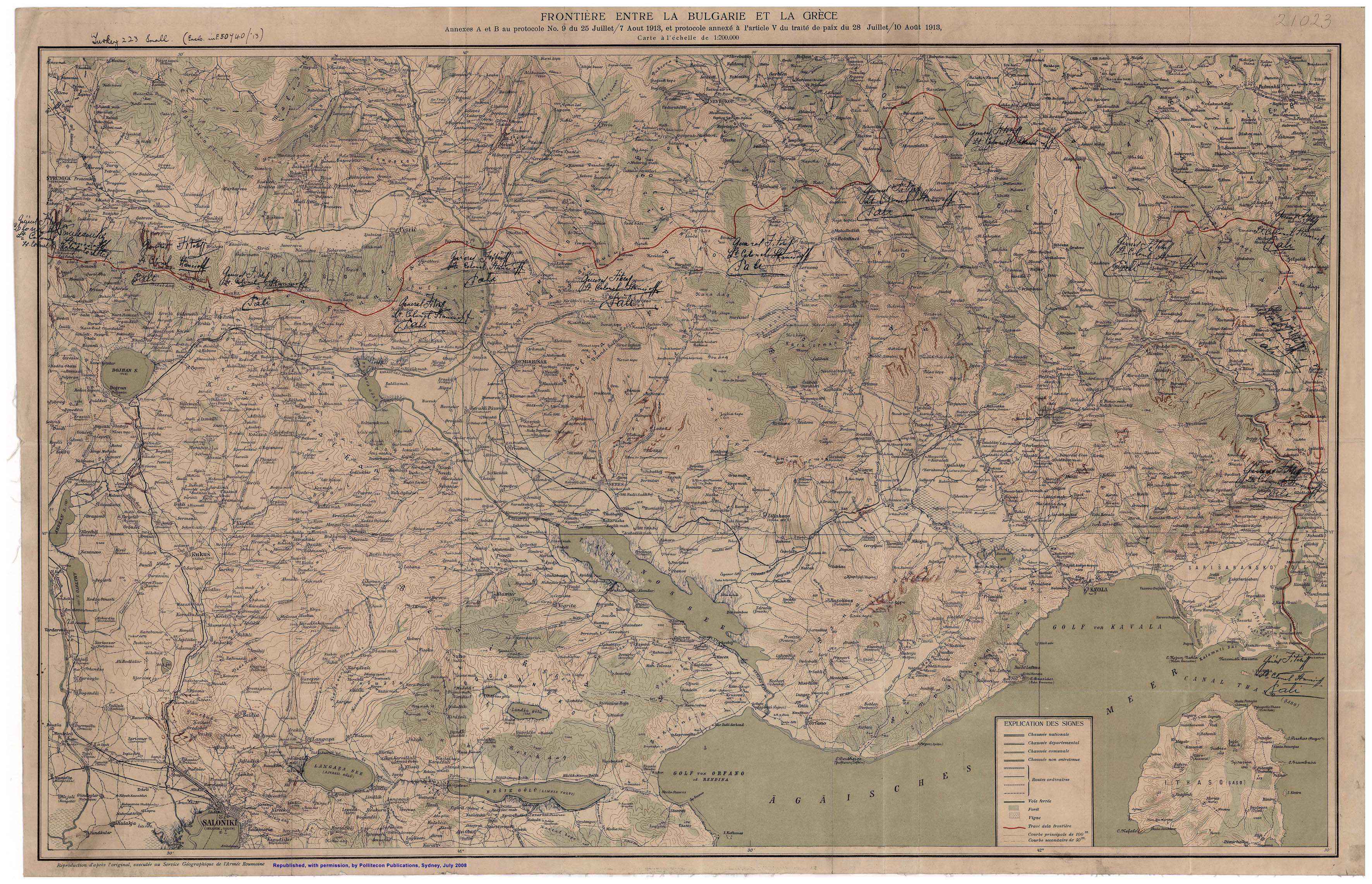
Ολόκληρη η Συνθήκη του Βουκουρεστίου στα αγγλικά [Αντιγραφή από site Σκοπιανών] με παραπομπές στους επίσημους χάρτες της Συνθήκης.
Peace Treaty between Roumania, Greece, Montenegro, Serbia and Bulgaria.
THEIR MAJESTIES the King of Roumania,
the King of the Hellenes, the King of Montenegro, and the King of
Serbia, on the one part, and His Majesty the King of the Bulgarians, on
the other part, animated by the desire to put an end to the state of war
at present existing between their respective countries and wishing, for
the sake of order, to establish peace between their long-suffering
peoples, have resolved to conclude a definitive treaty of peace. Their
said Majesties have, therefore, appointed as their plenipotentiaries,
namely:
His Majesty the King of Roumania: His
Excellency Titus Maioresco, President of his Council of Ministers,
Minister of Foreign Affairs; His Excellency Alexander Marghiloman, his
Minister of Finance; His Excellency Take Jonesco, his Minister of the
Interior; His Excellency Constantin G. Dissesco, his Minister of Public
Worship and Public Instruction; Major-General C. Coanda, Aide-de-camp,
Inspector-General of Artillery; Colonel C. Christesco, Assistant Chief
of the General Staff of his Army;
His Majesty the King of the Hellenes:
His Excellency Elefterios Venizelos, President of his Council of
Ministers, Minister of War; His Excellency Demetre Panas, Minister
Plenipotentiary; M. Nicolas Politis, Professor of International Law in
the University of Paris; Captain Ath. Exadactylos; Captain C. Pali;
His Majesty the King of Montenegro: His
Excellency General Serdar Yanko Voukotitch, President of his Council of
Ministers, Minister of War; M. Jean Matanovitch, formerly Charge
d’Affaires of Montenegro at Constantinople;
His Majesty the King of Serbia: His
Excellency Nicolas P. Pasitch, President of his Council of Ministers,
Minister of Foreign Affairs; His Excellency Milhailo G. Ristitch, his
Envoy Extraordinary and Minister Plenipotentiary at Bucharest; His
Excellency Dr. Miroslaw Spalaikovitch, Envoy Extraordinary and Minister
Plenipotentiary; Colonel K. Smilianitch; Lieutenant-Colonel D.
Kalafatovitch;
His Majesty the King of the Bulgarians:
His Excellency Dimitri Tontcheff, his Minister of Finances;
Major-General Ivan Fitcheff, Chief of Staff of his Army; M. Sawa
Ivantchoff, Doctor of Laws, formerly Vice-President of the Sobranje; M.
Simeon Radeff; Lieutenant-Colonel Constantin Stancioff of the General
Staff;
Who, in accordance with the proposal of
the Royal Government of Roumania, have assembled in conference at
Bucharest, with full powers, which were found to be in good and due
form, and who having happily reached an accord, have agreed upon the
following stipulations:-
I.
From the day on which the ratifications
of the present treaty are exchanged there shall be peace and amity
between His Majesty the King of Roumania, His Majesty the King of the
Bulgarians, His Majesty the King of the Hellenes, His Majesty the King
of Montenegro, and His Majesty the King of Serbia, as well as between
their heirs and successors, their respective States and subjects.
II.
The former frontier between the Kingdom
of Bulgaria and the Kingdom of Roumania, from the Danube to the Black
Sea, is, in conformity with the proces-verbal drawn up by the respective
military delegates and annexed to Protocol No.5 of July 22 (August 4),
1913, of the Conference of Bucharest, rectified in the following
manner:-
The new frontier shall begin at the Danube above Turtukaia and terminate at the Black Sea to the south of Ekrene.
Between these two extreme points the
frontier line shall follow the line indicated on the I/ 100,000 and
I/200,000 maps of the Roumanian General Staff, and according to the
description annexed to the present article.
It is formally understood that within a
maximum delay of two years Bulgaria shall dismantle the existing
fortifications and shall not construct others at Rustchuk, at Shumla, in
the intervening country, and in a zone of twenty kilometres around
Baltchik.
A mixed commission, composed of an equal
number of representatives of each of the two High Contracting Parties,
shall be charged, within fifteen days from the signing of the present
treaty, with delimiting the new frontier in conformity with the
preceding stipulations. This commission shall supervise the division of
the lands and funds which up to the present time may have belonged in
common to districts, communes, or communities separated by the new
frontier. In case of disagreement as to the line or as to the method of
marking it, the two High Contracting Parties agree to request a friendly
Government to appoint an arbitrator, whose decision upon the points at
issue shall be considered final.
III.
The frontier between the Kingdom of
Bulgaria and the Kingdom of Serbia shall follow, conformably to the
proces-verbal drawn up by the respective military delegates, which is
annexed to Protocol No.9 of July 25 (August 7), 1913, of the Conference
of Bucharest, the following line:-
The frontier line shall begin at the old
frontier, from the summit of Patarica, follow the old Turco-Bulgarian
frontier and the dividing line of the waters between the Vardar and the
Struma, with the exception of the upper valley of the Strumitza, which
shall remain Serbian territory; the line shall terminate at the Belasica
Mountain, where it will bend back to the Greco-Bulgarian frontier. A
detailed description of this frontier and the I/200,000 map of the
Austrian General Staff, on which it is indicated, are annexed to the
present article.
A mixed commission, composed of an equal
number of representatives of each of the two High Contracting Powers,
shall be charged, within fifteen days from the signing of the present
treaty, with delimiting the new frontier, in conformity with the
preceding stipulation.
This commission shall supervise the
division of the lands and funds, which up to the present time may have
belonged in common to the districts, communes, or communities separated
by the new frontier. In case of disagreement as to the line or as to the
method of marking it, the two High Contracting Parties agree to request
a friendly Government to appoint an arbitrator, whose decision upon the
points at issue shall be considered final.
IV.
Questions relating to the old
Serbo-Bulgarian frontier shall be settled according to the understanding
reached by the two High Contracting Parties, as stated in the protocol
annexed to the present article.
V.
The frontier between the Kingdom of
Greece and the Kingdom of Bulgaria shall follow, conformably to the
proces-verbal drawn up by the respective military delegates and annexed
to Protocol No.9 of July 25 (August 7), 1913, of the Conference of
Bucharest, the following line:-
The frontier line shall start from the
new Serbo-Bulgarian frontier on the summit of Belasica Planina and
terminate at the mouth of the Mesta on the Aegean Sea.
Between these two extreme points the
frontier line shall follow the line indicated on the I/200,000 map of
the Austrian General Staff, in accordance with the description annexed
to the present article.
A mixed commission, composed of an equal
number of representatives of each of the two High Contracting Parties,
shall be charged, within fifteen days from the signing of the present
treaty, with delimiting the frontier in conformity with the preceding
stipulations.
This commission shall supervise the
division of the lands and funds, which up to the present time may have
belonged in common to the districts, communes, or communities separated
by the new frontier. In case of disagreement as to the line or as to the
method of marking it, the two High Contracting Parties engage to
request a friendly Government to appoint an arbitrator, whose decision
upon the points at issue shall be considered final.
It is formally understood that Bulgaria renounces from henceforth all claim to the island of Crete.
VI.
The headquarters of the respective
armies shall be immediately informed of the signing of the present
treaty. The Bulgarian Government engages to begin to reduce its army to a
peace footing on the day after such notification. It shall order its
troops to their garrisons, whence, with the least possible delay, the
various reserves shall be returned to their homes.
If the garrison of any troops is
situated in the zone occupied by the army of one of the High Contracting
Parties, such troops shall be ordered to some other point in the old
Bulgarian territory and may not return to their regular garrisons until
after the evacuation of the above- mentioned occupied zone.
VII. The evacuation of Bulgarian
territory, both old and new, shall begin immediately after the
demobilization of the Bulgarian army and shall be completed within a
period of not more than fifteen days.
During this period the zone of
demarcation for the Roumanian army of operations shall be determined by a
line running as follows: Sistov-Lovcea-Turski-Isvor-Glozene-Zlatitza-
Mirkovo-Araba-Konak-Orchania-Mezdra-Vratza-Berkovitza-Lom-Danube.
VIII.
During the occupation of the Bulgarian
territories the various armies shall retain the right of requisition in
consideration of cash payment.
Such armies shall have free use of the
railways for the transportation of troops and of provisions of all
kinds, without compensation to the local authority.
The sick and wounded shall be under the protection of the said armies.
IX.
As soon as possible after the exchange of ratifications of the present treaty all prisoners of war shall be mutually restored.
The Governments of the High Contracting Parties shall each appoint special commissioners to receive the prisoners.
All prisoners in the hands of any of the
Governments shall be delivered to the commissioner of the Government to
which they belong, or to his duly authorized representative, at the
place which shall be determined upon by the interested parties.
The Governments of the High Contracting
Parties shall present to each other, respectively, as soon as possible
after all the prisoners have been returned, a statement of the direct
expenses incurred through the care and maintenance of the prisoners from
the date of their capture or surrender to the date of their death or
return. The sums due by Bulgaria to each one of the other High
Contracting Parties shall be set off against the sums due by each of the
other High Contracting Parties to Bulgaria, and the difference shall be
paid to the creditor Government in each case as soon as possible after
the exchange of the above-mentioned statements of expense.
X.
The present treaty shall be ratified,
and the ratifications thereof shall be exchanged at Bucharest within
fifteen days, or sooner if it be possible.
[1]
In witness whereof the respective plenipotentiaries have hereunto affixed their names and seals.
Done at Bucharest the twenty-eighth day
of the month of July (tenth day of the month of August) in the year one
thousand nine hundred and thirteen.
(Here follow signatures and seals.)
[1] The ratifications were exchanged August 30, 1913.
PROTOCOL appended to Article II of the Treaty of Bucharest of 28th July (10th August), 1913.
Description and Marking of the Route of the new Bulgaro-Romanian Border
The route of the border as marked on the
map at 1:200,000 follows the lines or points that are characteristic of
the ground, such as: valleys, dells, peaks, saddles, etc. Between the
villages, it follows the centre of the intervening space following, as
much as possible, the natural lines.
1. The general Route
The general route starts from the Danube
at the level of the intervening space separating the two islands
located to the north-east of the Iezer Kalimok.
| It leaves to Bulgaria |
It leaves to Romania |
| The villages: |
|
| Breslen |
Turk Smil |
| Kutuklii |
Sjanovo |
| Guvedze |
Hadzifaklar |
| Nastradin |
Kovandzilar |
| Kascilar |
Mesim Mahle |
| Kaslakoj |
Kara Mehmerler |
| Dzeferler |
Salihler |
| Kara Kodzalar |
Kose Abdi |
| Junuzlar |
Kanipe |
| Seremetkoj |
At Serman |
| Jeni Balabanlar |
Over Serman |
| Eski Balabanlar |
Omurdza |
| Salladin |
Taslimah |
| Kadir |
Rabman Asiklar |
| Jukli |
Ibrjam Mahle |
| Ferhatlar |
Cijrekci |
| Saltiklar |
Kara Kadilar |
| Coban Nasuf |
Kili Kadi |
| Sarvi |
Trubcular |
| Mahmuzli |
Ehisee |
| Kucuk Ahmed |
Vladimirovo (Deli Osmanlar) |
| Bestepe |
Serdimen |
| Peceli |
Kadijevo |
| Burhanlar |
Novo Botjovo |
| Kizildzilar |
Semiz Ali |
| Gokce Dolluk |
Saridza |
| Kapudzi Mahle |
Balidza |
| Korkut |
Kujudzue |
| Canlar |
Mustafa-Bejler |
| Emirovo |
Causkjoj |
| Semat |
Ekrene |
| Botjovo (Jusenli) |
|
| Kara Bunar |
|
| Ermenli |
|
| Krumovo |
|
| (Kumludza grn). |
|
| Jeni Mahle |
|
| Vlahar |
|
| Klimentovo (Kapakti) |
|
| Dis Budac |
|
| Bel Monastir (Mon Aladza). |
|
2. The detailed Route of the Border
(Please refer to the map at 1:100,000)
On leaving the Danube to follow the
route of the border to the Black Sea, this route is first marked by the
base of the terrace of the left bank of the valley separating the
villages of Turk Smil and Kiutiukli. It then goes up the spur located to
the north of the path from Kiutiukli to Senovo, crosses the central
hillock (there are three) located to the west of the village of Senovo;
skirts the beginning of the two dells located to the south of the
village of Senovo, descends to the opening of the dell located to the
west of the village of Kazeilar, which it follows almost to its
beginning; It then crosses the valley of Hadjifaklar and the plateau
alongside the road from Kazeilar to Balbunar. Between this road and the
hill 209, it crosses the valleys to the west and east of Kuvanojilar
between which it skirts, following the crest, the central dells of the
same valleys of Kuvanojilar. From the south of hill 209 , it goes toward
the central bend of the Demir-Babinar river to the east of the village
of Seremetkioi, which it reaches after having crossed the hillocks
located to the south-west of 209 and after having followed the dells and
the confluences closest to the straight line joining 209 to the hill
226 (north of Seremetkioi). To the east of Demir-Babinar, the route of
the border follows the spur located between Kiuseabdt Kasapla and Eski
Balabanlar, first crosses the valley, then the plateau located to the
east of this valley, between the villages of Atkioi and Saladinkioi, it
then descends into the valley of Saormankioi at the confluence of the
small dell of Saladinkio. The route then crosses the hillock located to
the north of the village of Kaidarkioi (on the road to Silistrie),
adjoins the confluence of the dell located to the north of the village
of Juklii to reach the road from Schoumia to Silistrie, at the south of
hill 269 after having skirted to the west, south and east of the village
of Rahman Asiclar, passing by the confluences or by the depressions
best located to fix this route at almost equal distance from the
villages that the border separates in this region. From 269 the route
passes between Dorutlar and Cioban Nasuf; descends to the confluences of
the first two dells located to the east of the village of Cioban Nasuf,
follows the spur flanked by these two dells, still running toward the
south-east following the thalweg of the dell starting in the river
Reonagol to the north-west of Mahmuzlai. It then descends to the course
of this river up to the confluence located to the north-west of the dell
of Mahmuzlai, which it then goes up to pass to the south of the hillock
260 (saddle), from which it descends into the dell of Kiuciuk Ahmed at
the junction of the roads. After having gone along the course of this
river a little, the route of the border goes up the spur located between
KiuCiuk Ahmed and Killi-Kadai, crosses the hillock 260, rejoins the
confluence of the two dells located to the west of Ekisce, goes up the
dell located to the west of this village, changes direction toward the
south, crosses hillock 277 and the saddle of the hillocks located
between the villages of Vladimirov and Gekcidelink; it crosses the
saddle located between the villages of Gekcidelink and Kapudjimah again,
from where it goes firstly toward the north and then toward the east
following the depression that passes to the north of Kortut (Korkut).
Between Kortut and the Isikli stream, the route of the border follows
the water catchment divide to the south of the village of Kadikioi and
the hill 303 up to the major bend at Isikli. In the following section,
which ends on the road from Varna to Dobrici, the border first follows
the course of the valley of Kumbudja, then the eastern branch of this
valley, passing to the north of the hillock 340. The last section of the
route of the border located between the Varna-Dobrici road and the
Black Sea crosses the dell of Kuiudjuk at its outset, follows a small
spur, then a dell in the south-east direction, it then curves toward the
north-east in the direction of the hill 299 following a water catchment
divide; it then separates, by lines that are characteristic of the
terrain, the villages of Ciauskioi and Kapaklii, after having, in the
same way, separated Mustafa Beiler from Vlahlar; It finally reaches the
Black Sea by crossing the saddle located to the south of hill 252.
3. The Provisional Marking of the Route
The route of the border thus defined
topographically using the existing cartographic documents (maps of
1:200,000, 1:126,000 and 1:100,000) is also plotted to certain
remarkable points on the ground. To this effect, the trigonometric
points of the existing triangulation were chosen first, followed by the
steeples of churches or the minarets in the villages. This is why this
route was included in a triangulation developed between the Danube and
the Black Sea. As the triangulation cuts the route of the border, the
intersections are marked at invariable points on the ground, whose
distance can be measured with an approximation of 50 metres.
This is how the point of departure of
the border from the Danube is plotted to the hill of the trigonometric
point of Turtucala which is at a distance of 15 kilometres. In the same
way, the distances of all the hillocks, saddles, etc, which form the
landmarks of the border, can be read from the map.
Signed in Bucharest, on 28th July (10th August) 1913.
For Romania:
T. MAIORESCO.
AL. MARGHILOMAN.
TAKE IONESCO.
C.G. DISSESCO.
GENERAL AIDE-DE-CAMP COANDA.
COLONEL C. CHRISTESCO.
For Greece:
E. K. VENISELOS.
D. PANAS.
N. POLITIS.
CAPTAIN A. EXADACTYLOS.
CAPTAIN PALI.
For Montenegro:
GENERAL SERDAR I. VOUKOTITCH.
I. MATANOVITCH.
For Serbia:
NIK. P. PACHITCH.
M. G. RISTITCH.
M. SPALAIKOVITCH.
COLONEL K. SMILIANITCH.
LIEUTENANT-COLONEL D. KALAFATO-VITCH.
For Bulgaria:
D. TONTCHEFF.
GENERAL FITCHEFF.
Dr. S. IVANTCHOFF.
S. RADEFF.
LIEUTENANT-COLONEL STANCIOFF.
PROTOCOL appended to Article III of the Treaty of Bucharest of 28th July (10th August), 1913
Detailed description of the new Bulgaro-Serbian border.
The line of the border starts to the
north of the old Bulgaro-Serbian border, from Patarica point, follows
the old Bulgaro-Turkish border up to Dixderica, then follows the water
catchment divide between the Vardar and the Strouma passing by Lukov vrh
(1297), Obel. Poljana, the hill 1458, hill 1495, Zanoga (1415),
Ponorica, Kadica, hill 1900, hill 1453, Cingane Kalessi, the crest of
Klepalo, hill 1530, the crest of Males planina (1445), turns to the west
toward hills 1514 and 1300, passes by the crest of Draganeva dag, Kadi
mesar tepesi, Kale tepesi, crosses the river Novicanska to the south of
the village of Rajanci, passes between the villages of Oslovci and
Susevo, crosses the river Stroumica between Radicevo and Vladovic and
goes up toward hill 850, again follows the water catchment divide
between the Vardar and the Strouma by hills 957, 571, 750, 895 and 850
and reaches the crest of the Belasica mountain, where it joins the
Bulgaro-Greek border.
Signed in Bucharest, on 28th July (10th August) 1913.
For Romania:
T. MAIORESCO.
AL. MARGHILOMAN.
TAKE IONESCO.
C.G. DISSESCO.
GENERAL AIDE-DE-CAMP COANDA.
COLONEL C. CHRISTESCO.
For Greece:
E. K. VENISELOS.
D. PANAS.
N. POLITIS.
CAPTAIN A. EXADACTYLOS.
CAPTAIN PALI.
For Montenegro:
General SERDAR I. VOUKOTITCH.
I. MATANOVITCH.
For Serbia:
NIK. P. PACHITCH.
M. G. RISTITCH.
M. SPALAIKOVITCH.
COLONEL K. SMILIANITCH.
LIEUTENANT-COLONEL D. KALAFATO-VITCH.
For Bulgaria:
D. TONTCHEFF.
GENERAL FITCHEFF.
DR. S. IVANTCHOFF.
S. RADEFF.
LIEUTENANT-COLONEL STANCIOFF.
PROTOCOL appended to Article IV of
the Treaty of Bucharest of 28th July (10th August) 1913, regarding the
Questions in relation to the former Serbo-Bulgarian Border.
A mixed Serbo-Bulgarian Commission,
which will be established within a period of one year with effect from
the date of ratification of the peace treaty, shall govern the questions
in relation to the former Serbo-Bulgarian border, taking the thalweg of
Timek as a principle, insofar as this river serves as the border
between Serbia and Bulgaria, and the line from the summit of the heights
of Batchichte to Ivanova Livada.
At the latest within a period of three
years with effect from the date of ratification of the peace treaty, the
two contracting high parties shall be bound to mark the entire route of
the former Serbo-Bulgarian border by permanent signs.
All the existing Mills on Timok, as this
serves as the border between Serbia and Bulgaria, shall be removed
within a period of three years from the date of ratification of the
peace treaty and henceforth no installation of this type shall be
permitted on this part of the river.
It is also understood that it will no
longer henceforth be permissible for the subject of the two contracting
high parties to own real estate divided by the border line (the property
known as “dvodlassna”). As regards the ownerships of this type
currently in existence, each of the two governments hereby undertake to
proceed with the expropriation, by means of a just prior compensation
fixed by the local procedure, of the parcels located on its side of the
border. The same rule shall apply to the properties located in the
enclave of Roglievo-Koilovo and in that of Halovo-Vregeogrotzi, their
legal situation with regard to the citizens of the two neighbouring
States having been settled by Protocol No. 11 of the mixed
Serbo-Bulgarian Commission of 1912. The aforementioned expropriations
shall be performed within the deadline of three years at the latest,
with effect from the date of ratification of the peace treaty.
Signed in Bucharest, on 28th July (10th August) 1913.
For Romania:
T. MAIORESCO.
AL. MARGHILOMAN.
TAKE IONESCO.
C.G. DISSESCO.
GENERAL AIDE-DE-CAMP COANDA.
COLONEL C. CHRISTESCO.
For Greece:
E. K. VENISELOS.
D. PANAS.
N. POLITIS.
CAPTAIN A. EXADACTYLOS.
CAPTAIN PALI.
For Montenegro:
GENERAL SERDAR I. VOUKOTITCH.
I. MATANOVITCH.
For Serbia:
NIK. P. PACHITCH.
M. G. RISTITCH.
M. SPALAIKOVITCH.
COLONEL K. SMILIANITCH.
LIEUTENANT-COLONEL D. KALAFATO-VITCH.
For Bulgaria:
D. TONTCHEFF.
GENERAL FITCHEFF.
DR. S. IVANTCHOFF.
S. RADEFF.
LIEUTENANT-COLONEL STANCIOFF.
PROTOCOL appended to Article V of the Treaty of Bucharest of 28th July (10th August), 1913
Definitive border between Bulgaria and Greece
The border line starts on the crest of
the Belasica planina from the Bulgaro-Serbian border; follows this
crest, then descends along the crest located to the north of Iurukleri
and goes to the confluence of the Strouma and the Bistrica, goes up the
Bistrica and then goes toward the east at Cengane Kalesi (1500). From
there it reaches the crest of Ali Butus (hill 1650) and follows the line
of the water catchment divide, between the hills 1820, 1800, 713 and
Stragac. From there, still following the water catchment divide it goes
toward the north and then toward the north-east, to follow the water
catchment divide between the hills 715, 660 and reaches the hills 1150
and 1152, from where, by following the crest to the east of the village
of Rakistan it crosses the Mesta, goes toward the summit of Rusa and
Zeleza, crosses the Despat (Rana) suju and reaches Cuka. From this point
it re-takes the water catchment divide and passes by Sibkova, Cadirkaya
(1750), Avlika dag (1517), Kajin Cal (1811), Debikli (1587), descends
toward the south at hill 985, to turn to the east at the south of the
village of Karovo, from where it goes toward the east, passes to the
north of the village of Kajbova, goes toward the north and passes by the
hills, 1450, 1588, 1850 and 1845. From there it descends toward the
south passing by Cigla (1750), Kuslar (2177). From Kuslar, the border
line follows the water catchment divide of the Mesta and the Iassi Evren
dere by Rujan pl. and reaches Achlat dagi (1300), follows the crest
that goes toward the railway station at Okeilar (41) and from this point
follows the course of the Mesta to end in the Aegean Sea.
Signed in Bucharest, on 28th July (10th August) 1913.
For Romania:
T. MAIORESCO.
AL. MARGHILOMAN.
TAKE IONESCO.
C.G. DISSESCO.
GENERAL AIDE-DE-CAMP COANDA.
COLONEL C. CHRISTESCO.
For Greece:
E. K. VENISELOS.
D. PANAS.
N. POLITIS.
CAPTAIN A. EXADACTYLOS.
CAPTAIN PALI.
For Montenegro:
GENERAL SERDAR I. VOUKOTITCH.
I. MATANOVITCH.
For Serbia:
NIK. P. PACHITCH.
M. G. RISTITCH.
M. SPALAIKOVITCH.
COLONEL K. SMILIANITCH.
LIEUTENANT-COLONEL D. KALAFATO-VITCH.
For Bulgaria:
D. TONTCHEFF.
GENERAL FITCHEFF.
DR. S. IVANTCHOFF.
S. RADEFF.
LIEUTENANT-COLONEL STANCIOFF.
Certified copy of the original:
A. PISOSKI.
FILITTI.
(No. 1.) – Mr. Maioresco, Minister of
Foreign Affairs of Romania, to Mr. Tontcheff, First Delegate of the
Royal Government of Bulgaria to the Conference of Bucharest.
Bucharest, 22nd July (4th August), 1913
DEAR MINISTER
As was agreed during our negotiations,
with a view to the establishment of a durable peace between our two
countries, I have the honour to request your Excellency to confirm, in
reply to my note, that:
In accordance with the declaration made
by Bulgaria in the protocol signed in London on 16th (29th) January
1913, and Article IV of the protocol of the Conference of Saint
Petersburg of 26th April (9th May) of the same year, Bulgaria consents
to give autonomy to the schools and churches of Koutzo-Valaques located
in future Bulgarian possessions and to permit the creation of an
Episcopate for the same Koutzo-Valaques, with the facility for the
Romanian Government to subsidise, under the supervision of the Bulgarian
Government, the aforementioned present cultural institutions and those
to come,
Yours sincerely, etc.
T. MAIORESCO
(No. 2) – Mr. Tontcheff, First Delegate
of the Royal Government of Bulgaria to the Conference of Bucharest, to
Mr. T. Maioresco, President of the Council, Minister of Foreign Affairs.
Bucharest, 22nd July 1913.
DEAR MINISTER,
In response to your Excellency’s note of 22nd July 1913 I have the honour to confirm to you that:
In accordance with the declaration made
by Bulgaria in the protocol signed in London on 16th (29th) January
1913, and Article IV of the protocol of the Conference of Saint
Petersburg of 26th April (9th May) of the same year, Bulgaria consents
to give autonomy to the schools and churches of Koutzo-Valaques located
in future Bulgarian possessions and to permit the creation of an
Episcopate for the same Koutzo-Valaques, with the facility for the
Romanian Government to subsidise, under the supervision of the Bulgarian
Government, the aforementioned present cultural institutions and those
to come,
Yours sincerely, etc.
TONTCHEFF
(No. 3) – Mr. Maioresco, Minister of
Foreign Affairs of Romania, to Mr. E. Veniselos, President of the
Council of Ministers of Greece, First Delegate of the Royal Hellenic
Government to the Conference of Bucharest.
Bucharest, 23rd July (5th August) 1913
DEAR PRESIDENT OF THE COUNCIL
As was agreed during our negotiations, I have the honour to request your Excellency to confirm, in reply to my note, that:
Greece consents to give autonomy to the
schools and churches of Koutzo-Valaques located in future Greek
possessions and to permit the creation of an Episcopate for the same
Koutzo-Valaques, with the facility for the Romanian Government to
subsidise, under the supervision of the Hellenic Government, the
aforementioned present cultural institutions and those to come,
Yours sincerely, etc.
T. MAIORESCO
(No. 4) – Mr. E. K. Veniselos, First
Delegate of the Royal Hellenic Government to the Conference of
Bucharest, to Mr. T. Maioresco, President of the Council of Ministers,
Minister for Foreign Affairs of Romania.
Bucharest, 23rd July (5th August) 1913
DEAR PRESIDENT OF THE COUNCIL,
In response to the note, of today’s
date, which your Excellency sent to me, I have the honour to confirm to
your Excellency that:
Greece consents to give autonomy to the
schools and churches of Koutzo-Valaques located in future Greek
possessions and to permit the creation of an Episcopate for the same
Koutzo-Valaques, with the facility for the Romanian Government to
subsidise, under the supervision of the Hellenic Government, the
aforementioned present cultural institutions and those to come,
Yours sincerely, etc.
R. K. VENISELOS
(No. 5.) – Mr. Maioresco, Minister for
Foreign Affairs of Romania, to Mr. N. Pachitch, President of the Council
of Ministers of Serbia, First Delegate of the Royal Government of
Serbia to the Conference of Bucharest.
Bucharest, 23rd July (5th August) 1913
DEAR PRESIDENT OF THE COUNCIL,
As was agreed during our negotiations, I have the honour to request your Excellency to confirm, in reply to my note, that:
Serbia consents to give autonomy to the
schools and churches of Koutzo-Valaques located in future Serbian
possessions and to permit the creation of an Episcopate for the same
Koutzo-Valaques, with the facility for the Romanian Government to
subsidise, under the supervision of the Serbian Government, the
aforementioned present cultural institutions and those to come,
Yours sincerely, etc.
T. MAIORESCO
(No. 6.) Mr. Pachitch, First Delegate of
the Royal Government of Serbia to the Conference of Bucharest, to Mr.
T. Maioresco, President of the Council of Ministers, Minister for
Foreign Affairs of Romania.
Bucharest, 23rd July (5th August) 1913
DEAR PRESIDENT OF THE COUNCIL,
In response to the note that your
Excellency sent to me on the 23rd of this month, I have the honour to
confirm to you that Serbia consents to give autonomy to the schools and
churches of Koutzo-Valaques located in future Serbian possessions and to
permit the creation of an Episcopate for the same Koutzo-Valaques, with
the facility for the Romanian Government to subsidise, under the
supervision of the Serbian Government, the aforementioned present
cultural institutions and those to come,
Yours sincerely, etc.
NIK. P. PACHITCH
Certified copy of the original:
A. PISOSKI.
FILITTI.
Sources: Main Treaty Text: Major Peace
Treaties of Modern History, 1648-1967, Vol. II, Editor Fred L Israel,
New York: Chelsea House in association with McGraw Hill, 1967. Treaty
Protocols: Based on French Version from Consolidated Treaty Series
Volume 218, 1913, Parry, published by Oceana Publications Inc NIC, Dobbs
Ferry, New York. This translation from the French was commissioned by
Pollitecon Publications. Translation Copyright Pollitecon Publications.
Permission to reprint granted when these Sources are acknowledged in
full.